
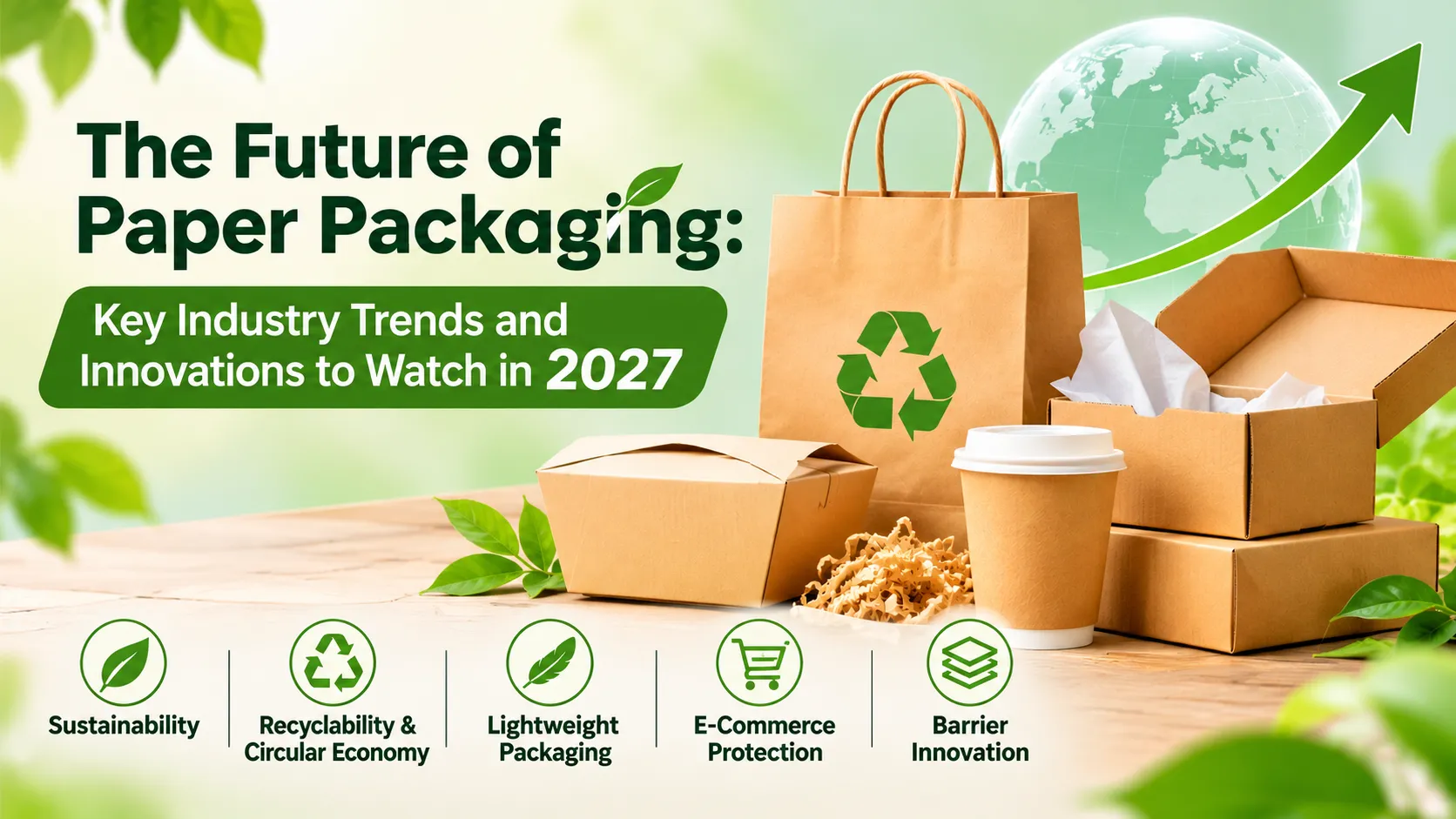
There is no doubt that the paper packaging sector will witness a major change in the year 2027. Rising environmental consciousness, changes in consumer demands, innovations in technology, and packaging laws have led companies to reconsider their product packaging and delivery process. This includes recyclable packaging solutions for the replacement of plastic packaging, light weight products, and innovative production procedures among others.
It is essential for manufacturers, retailers, food companies, and e-commerce providers to be aware of these trends in order to be successful in their respective fields. Shittla Paper Global understands the need for sustainability in paper sourcing, high quality products, and innovation in order to meet the demands of its customers.
1. Sustainable Packaging Takes Centre Stage
Sustainability continues to be one of the most powerful factors driving change in the packaging industry in 2027. Companies are constantly seeking sustainable materials for packaging that will enable minimising waste and promoting recycling and sustainability across the whole life cycle of the products.
Paper and paperboard products have become popular recently since they can be made from sustainable fibres and be recycled properly if designed and manufactured correctly. Various companies are researching paper bags, corrugated boxes, folding cartons, and paper wrapping materials as an alternative to plastic packaging.
However, paper does not necessarily mean sustainability. The right procurement of sustainable fibre, effective production, proper coating, and recycling opportunities play an important role. Packaging must be estimated depending on its purpose, durability, material used, and how it will be disposed of at the end of its life cycle. As the industry analysis suggests, the move towards the use of fibre-based packaging is driven by the desire to make sustainability practices more tangible.
2. The Shift Towards Plastic-Free and Fibre-Based Alternatives
Paperization as an ongoing trend continues to shape product and packaging design. Organizations in different sectors, including the foodservice industry, retail trade, cosmetics business, and online commerce are actively looking into options of how to substitute plastic materials with paper.
Possible substitutions range from paper packaging of take-away food to paper cushions in the transportation of fragile cargo, from paperboard boxes for consumer products to moulded fiber packaging.
While such innovations can allow companies to lower their plastic dependence, material choice should take into account practical properties of packaging. If the packaging is supposed to be used for oily foods, beverages, or moisture sensitive items, certain barriers might be necessary.
In 2027, the critical point will not lie in paperization itself but in the development of packaging with the necessary protective functions.
3. Recyclability and Circular Economy Principles
More and more often, recyclability becomes a key factor when making decisions about the packaging. Instead of seeing the packaging as a single-use material, companies think about how its resources can be recovered and used again once the item has been used.
Circular economy model aims at rational consumption of resources and waste minimization and includes using recycled materials, cutting down the number of layers and creating products which can be collected and recycled through existing recycling infrastructure.
In 2027, there will be new packaging legislation and extended producer responsibility requirements. Depending on markets where the business operates, such requirements may differ, therefore the company needs to check what kind of legislation is in place for each market separately. Some of the possible actions for companies to consider are selecting recyclable materials and avoiding unneeded mixed materials constructions, checking if coatings are compatible with recycling and providing disposal instructions if necessary.
4. Lightweight Packaging and Material Efficiency
Lightweight packaging is another significant development in 2027. Companies are looking for solutions to consume fewer materials while maintaining the safety, strength, and durability of their products.
Lightweight packaging will reduce material use, lower shipment weight, and improve storage. For instance, optimised corrugated cartons, correct choice of paper types, and appropriate paper packaging sizes may allow one to avoid unnecessary material use.
Size matters for e-commerce companies as oversized packages usually need more cushioning and take more space when being delivered. Choosing the right packaging size will allow a business to become more efficient logistically and to avoid unnecessary waste.
It is crucial to find the right balance of packaging strength, its material use, and its price. Packaging that is too lightweight may damage the products, cause more returns, and waste resources.
5. E-Commerce and the Growing Demand for Protective Packaging
The trend of online shopping will ensure the need for packaging that can offer adequate protection to products during their storage, handling, and transport processes. Packaging needs to withstand a series of challenges while being transported from one point to another as the product moves through many distribution phases.
Paper packaging alternatives include corrugated packaging, kraft paper, paper padding, and protective paper wrap packaging, which cater to diverse shipping needs. Efforts are being made in developing packaging that is user-friendly in opening, storing, and disposing of after delivery.
Compact designs and correctly sized packaging can assist brands to control costs associated with shipment. E-commerce businesses require packaging that offers protection, efficiency in packaging materials, and professional appearance.
6. Innovation in Paper Coatings and Barrier Technology
Conventional paper packaging encounters difficulties when subjected to moisture, oil, and liquid environments. With regard to developments made in barrier technology by 2027, manufacturers find themselves with more options to consider when applying different uses for paper-based products. Certain coatings and processes could be used in order to increase resistance to oil, moisture, and other external factors. This issue is especially important for food packaging, takeaway services, bakery goods, and similar applications where hygiene and protection of products are important.
Nevertheless, companies should be careful with the choice of materials because some types of coating or multilayer construction could complicate recycling process according to the composition and recycling facilities available locally.
Food-contact compliance is also an important issue that needs to be taken into account. When a packaging is supposed to have direct contact with food products, it should comply with safety standards of target market. It is a challenging task for the industry to create effective barriers without increasing difficulty of recycling.
7. Digitalisation and Smarter Packaging Operations
Changes are taking place in the area of manufacturing process management for the packaging manufacturers. Digital tracking, automation of machines, and quality control can be used by the manufacturers to improve operational efficiency and product consistency.
Data from the production process can be used to detect problems, monitor material usage, reduce machine downtime, and streamline the manufacturing process. Better inventory management can assist the company in adapting to the needs of customers.
Yet another promising trend that can be used is the use of QR codes and digital product information. Whenever relevant, such information can provide details of the product, its source, recycling guidelines, and communication with the brand. It can assist paper packaging manufacturers in providing better customer service.
8. Cost Management and Supply Chain Resilience
Even with an increasing requirement for sustainable packaging, the cost factor will still be considered by organizations in 2027. The cost of paper, recyclable fiber, energy, freight rates, and changes in demand could affect the process of procurement. Therefore, organizations are paying more attention to reliable suppliers, stable specifications of the purchased products, and good inventory management.
Instead of purchasing packaging on the basis of the cheapest cost, it is important for procurement departments to pay more attention to total cost. Material costs, waste, transportation, storage, product damage, and supply reliability are all factors that need to be taken into account.
Developing good relationships with suppliers, setting proper quality standards, and ordering goods considering the demand could allow organizations to deal with any uncertainties in procurement.
In addition, the assessment of suppliers for international companies should cover such factors as documentation, capacity for production, quality control processes, and punctual deliveries.
9. How Businesses Can Prepare for the Future of Paper Packaging
To take advantage of the above industry trends, companies need to apply a logical approach when selecting packaging.
Examine current materials: Look into ways of minimizing plastic use, excessive packaging, and material waste.
Check for recyclability: Find out if the chosen package is easy to collect and recycle in the market of choice.
Assess product compatibility: Verify whether packaging offers sufficient strength, waterproofing, and protection in specific conditions.
Choose suppliers wisely: Examine quality assurance, responsible sourcing, production capacity, and reliability of delivery.
Watch out for new regulations: Know about packaging, recycling, labeling, and food contact regulations that apply to your business.
Evaluate progress: Monitor material use, packaging expenses, damage frequency, and waste reduction to measure the results.
The right approach will help businesses to use sustainable packaging without compromising on safety, efficiency, and commercial considerations.
Conclusion
The paper packaging industry of 2027 will be influenced by such factors as sustainability, recyclability, light weighting, technological development, and the need for dependable logistics. The companies stop replacing one material with another, trying to find ways of making a product which will be efficient in terms of the environment and operations. Being aware of these tendencies can help manufacturers, retailers, food industries, and e-commerce firms in their purchasing processes and in maintaining their competitive advantages.
The Shittla Paper Global is convinced that the success of paper packaging in the future will lie in the harmony of such factors as high quality, sustainable materials, and awareness of customers’ needs.